
Format
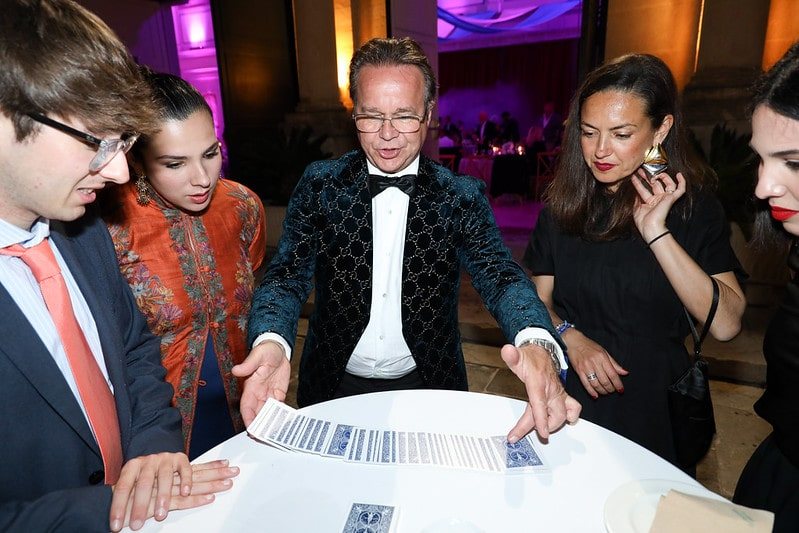
Close-up magic
The card is in their hands, not in his. That is the whole difference. Close-up magic happens at arm's length, in the middle of your reception, and it turns a room checking their phones into a room telling each other what they just saw.
Where it works
The awkward hour, solved
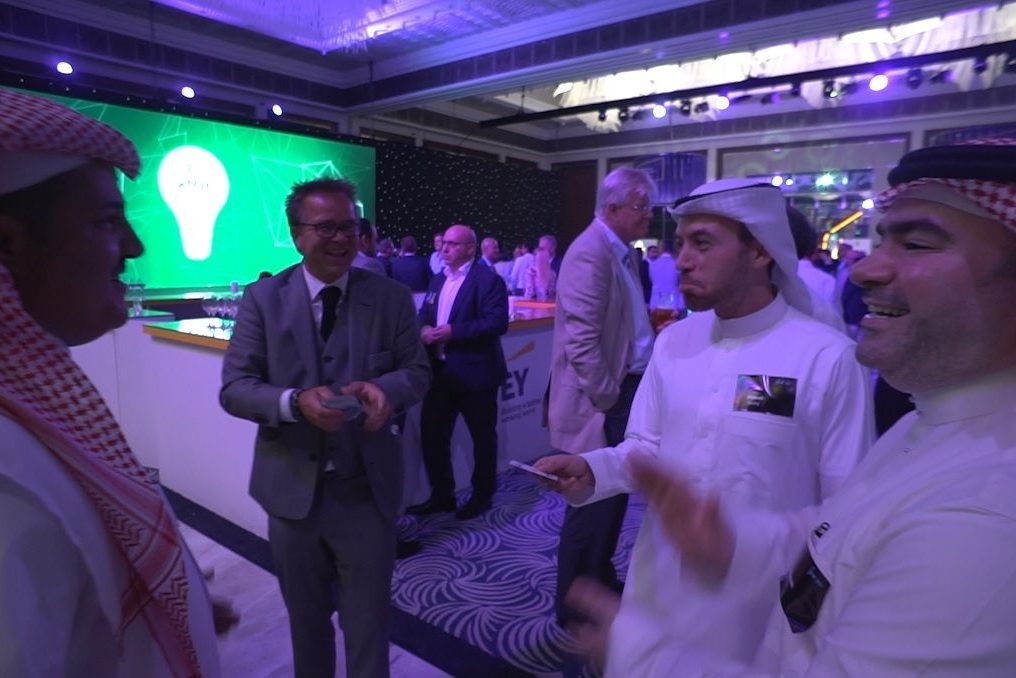
Every corporate evening has one: guests have arrived, the programme has not started, and nobody quite knows who to talk to. Close-up magic is built for that hour. He moves from group to group and leaves each one with something to say to the next.
It also works where a stage never could. A reception with no sightlines. A dinner between courses. A stand with two square metres of floor. A conference break in a low-ceilinged foyer.
How a set runs
What actually happens on the night
Before
He arrives an hour ahead, walks the room with your event lead, and agrees where the sets start and stop. If there is a programme to protect, it gets protected.
The approach
No microphone, no announcement, no clown entrance. He joins a group the way another guest would, and the first effect lands before they realise a performer arrived.
The set
Four to six minutes per group. Long enough to build to something they will describe badly for weeks. Short enough that nobody feels held hostage.
The handover
He leaves the group holding the object it happened to. A signed card, a bent coin, their own ring. The story stays in the room after he moves on.
Close-up is not a stage show made smaller
A stage show gives one shared moment to the whole room, and it needs a slot, sightlines and sound. Close-up gives every guest their own moment, and it needs nothing.
For most evenings the honest answer is close-up at the reception and a stage set after dinner. If the budget allows one, pick where your guests will actually be standing.
Material
Written for adults who negotiate for a living
The room is not easy. Senior people spend their working lives spotting the move, and half of them say so in the first minute. That is what the material was built against: everything in their hands, with objects they brought, at a distance where hiding anything is supposed to be impossible.
No audience-participation humiliation, no volunteer dragged forward, no running joke at anyone's expense. Your client is still your client at the end of the set.
The reel
Watching beats reading
Two and a half minutes from real rooms. Cut from bookings rather than filmed for a website.
The reel plays from Vimeo and only loads once you press play.
What you are booking
- Duration
- Ninety minutes to three hours of walk-around, split into sets with breaks
- Audience
- From twenty guests to several hundred, worked in groups of five to fifteen
- Space required
- None. No stage, no backdrop, no rigging
- Sound and light
- Not required. He works without a microphone
- Language
- Performed in English or Dutch
- Dress
- Black tie or a dark suit, matched to your dress code
- Travel
- Worldwide. Travel and accommodation are quoted separately from the fee
Questions worth asking before you book
Does every group see the same thing?
The spine is the same, because a set that builds properly has to be built. What surrounds it is not: the objects, the names, the jokes and the finish come out of the group in front of him. Guests who compare notes afterwards find that out.
Can he work while dinner is being served?
Yes, and it is one of the better uses of the format. He works the gaps between courses, table by table, and steps back the moment plates move. Agree the service schedule beforehand and he builds his sets around it.
What do you need from us?
A running order, a contact on the night who knows it, and somewhere to leave a jacket. That is the list. No power, no sound, no changing room, no rider.
Does it survive a loud room?
Better than a stage show does. He works at conversational distance, so the noise floor that kills a microphone barely registers. Very loud music is the one real limit, and that is usually a scheduling question.
From the floor
What the format looks like in a room
Photographs from real bookings rather than a studio. The rooms differ; the distance to the nearest guest does not.
-
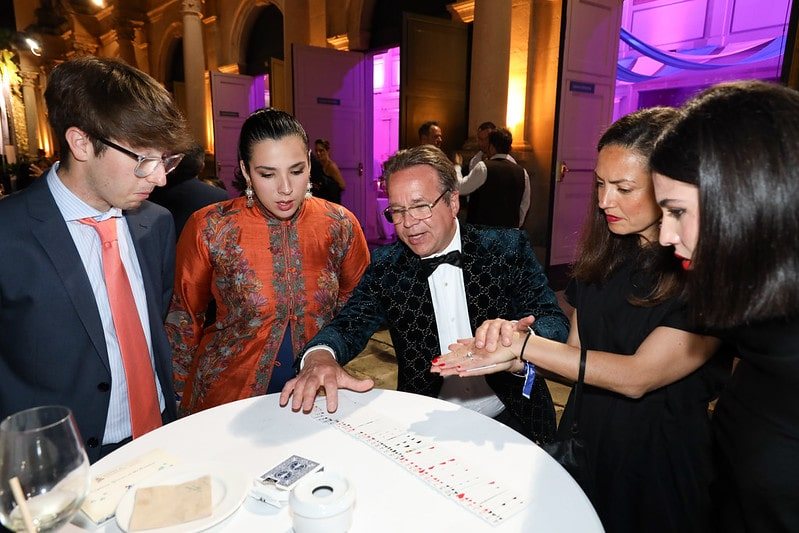
At the table, leaning in -
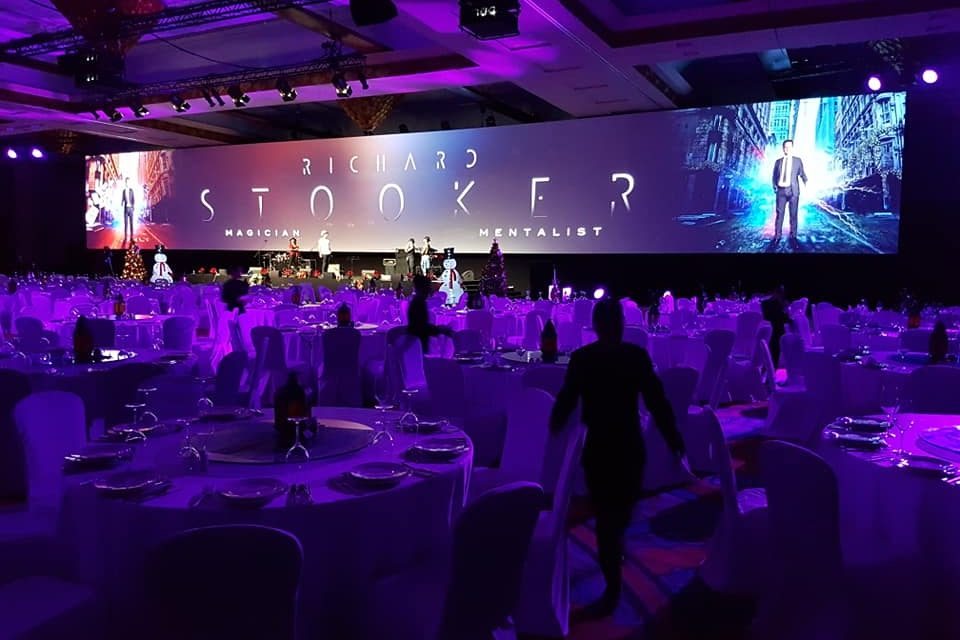
Set for dinner, nobody in yet -
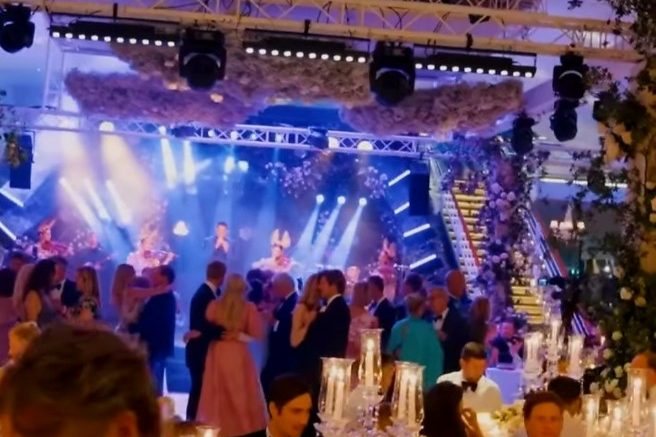
A gala hall, seen from the back -
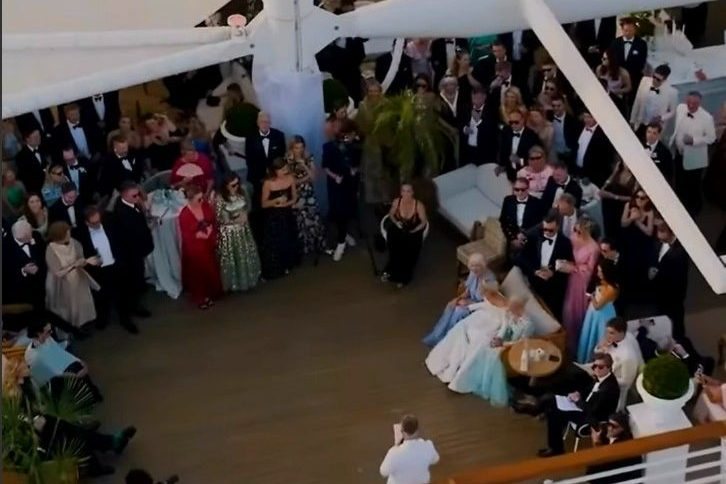
Black tie, and the middle left open -
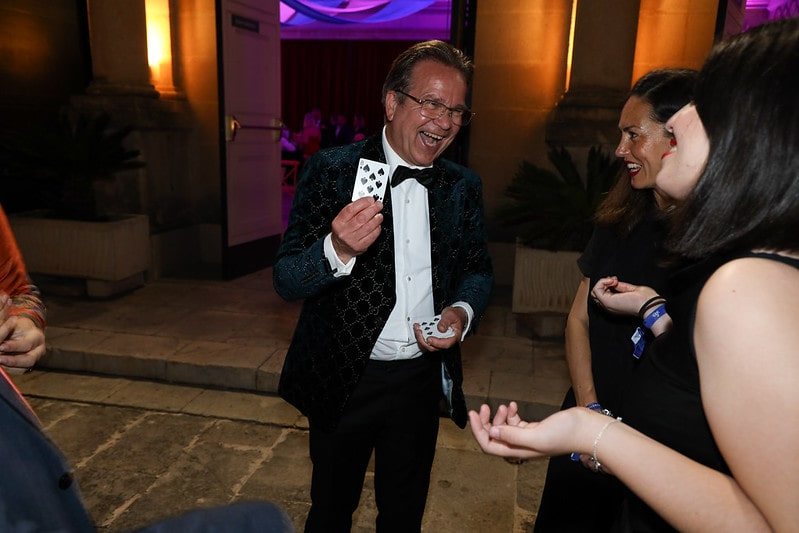
Arm's length, no table
Check a date
Send the date, the city, and roughly how many guests. You get an honest yes or no, and a quote that separates the fee from the travel.
Most enquiries are answered the same day.