
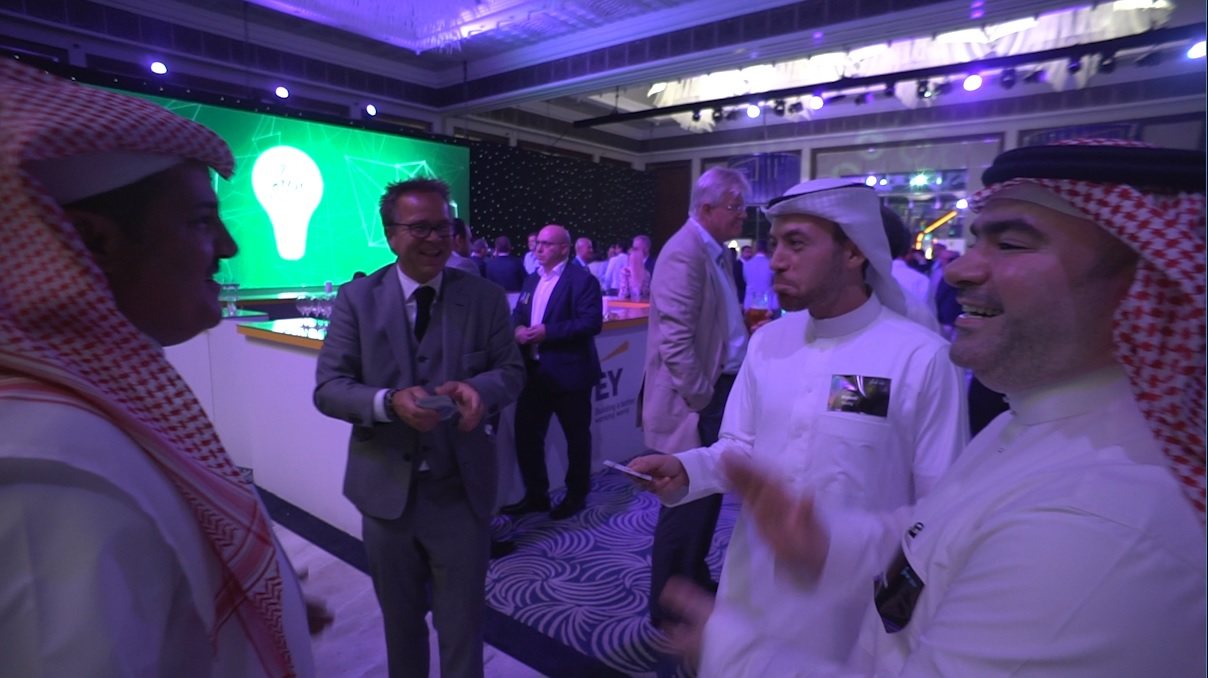
Occasion
Trade shows and exhibition stands
Your stand has about two seconds to stop someone walking past at eleven on the second morning. A screen does not do it. A bowl of sweets does not do it. Something happening in a stranger's hands, four feet from the aisle, does it every time.
What the job actually is
This is lead generation, not entertainment
On a stand he is not there to be enjoyed. He is there to turn aisle traffic into a standing crowd, hold it for three minutes, and hand it to your sales people at the moment they are most willing to talk. Everything else follows from that.
The measurable version: crowds form and reform every few minutes, your team gets a queue instead of a doorway, and the conversation starts with your product.
How a stand day runs
Four sets an hour, all day
The stop
He works the aisle edge, not the back of the stand. The first effect is short and visible from three metres, because the job at that point is making one person stop walking.
The build
One person stopping creates the crowd. Three minutes later fifteen people are standing where the aisle was, and the stand looks like the busy one from every direction.
The handover
He finishes on the product line you gave him and steps back so your team steps in. The handover is scripted in advance; it decides whether the day was worth the fee.
The reset
Sets of forty five minutes with fifteen minute breaks, across a six hour day. Continuous performing on a stand does not work and does not last.
At the stand
What it looks like on the floor
A stand has seconds to stop someone, and a conversation has to start on its own once they stop.
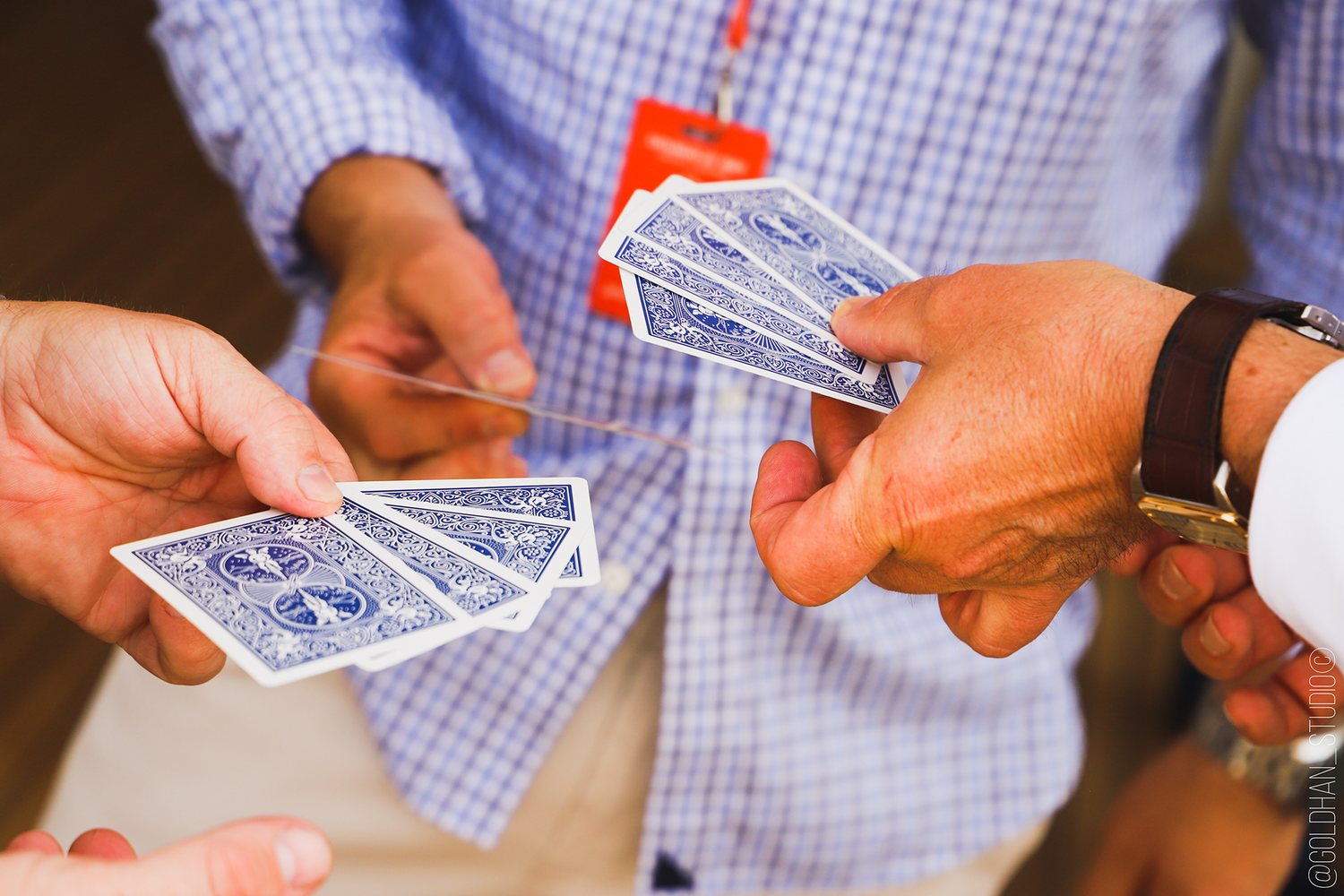

The set stops the walk past and hands the visitor to your team with something to say.
Why it fits a stand at all
Two square metres and no power
No stage, no rigging, no truss, no power draw, no floor plan revision, nothing to argue about with the hall's technical office. A patch of carpet at the aisle edge and somewhere to put a jacket.
That matters more at a trade fair than anywhere else, because stand space is the most expensive floor your company will rent all year.
What you are booking
- Duration
- Four to six hours per day, in forty five minute sets
- Space required
- Two square metres at the aisle edge
- Power and rigging
- None
- Your product
- Worked into the set, with the handover line agreed in advance
- Multiple days
- Consecutive days are quoted at a lower daily rate
- Dress
- Matched to your stand team, or black tie if the stand is a luxury brand
- Travel
- Worldwide. Travel and accommodation are quoted separately from the fee
Questions worth asking before you book
Can he mention our product in the set?
Yes, and it works best as one clean line at the finish rather than a sales script threaded throughout. A crowd that feels sold to disperses; a crowd that feels entertained and then hears one clear sentence stays.
How many people does a set reach?
Fifteen to twenty five per set on a decent aisle, four to six sets a day. Reach is not the number that matters, though. It is how many stopped, stayed, and ended up talking to your team.
Do we need to brief our own stand staff?
Yes, and it is the most common failure. A team that does not know a crowd is coming will stand behind the counter and watch it disperse. Ten minutes with them before doors fixes it.
From the floor
Evenings that ran like this one
Receptions, dinners and programmes where the act had to fit around a running order somebody else wrote.
-
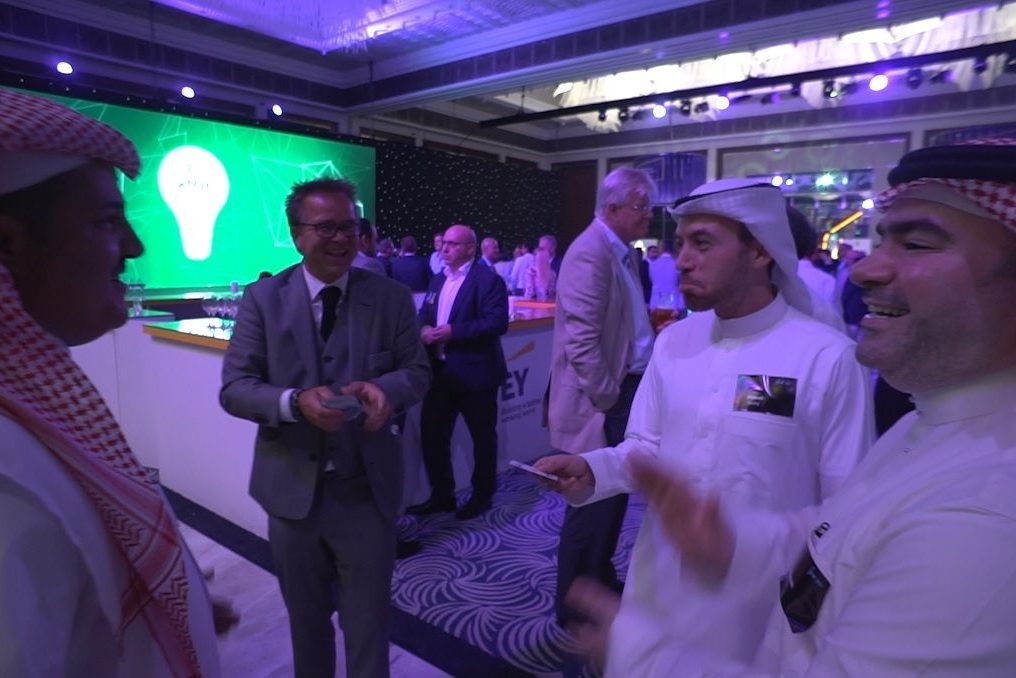
Dubai, during the reception -
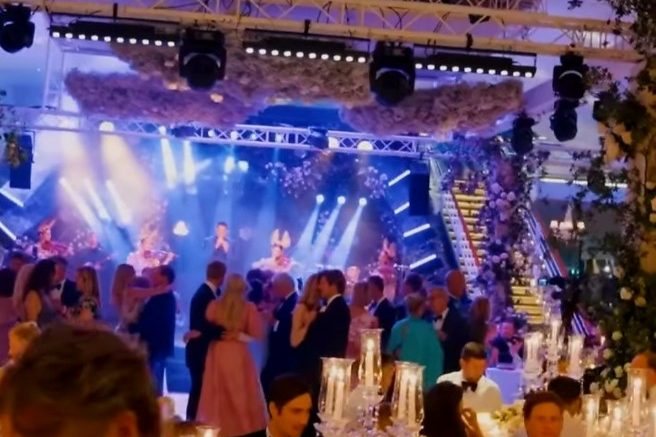
A gala hall, seen from the back -
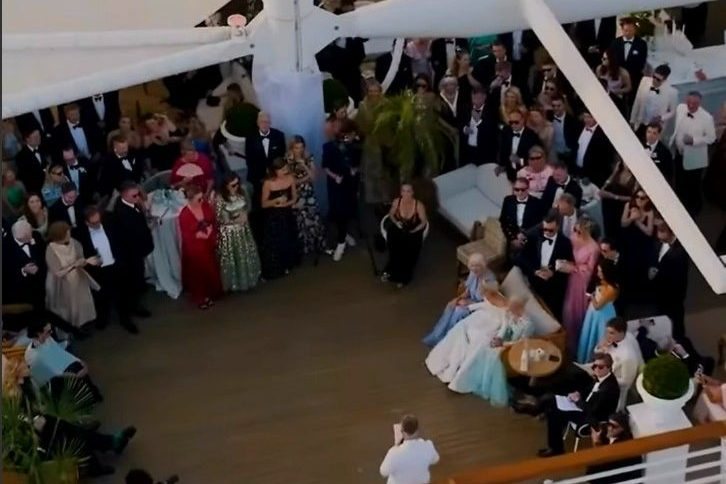
Black tie, and the middle left open -
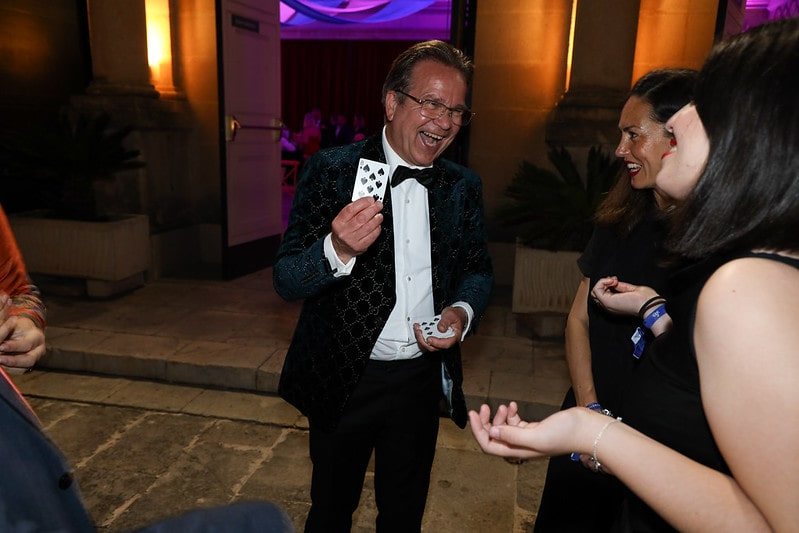
Arm's length, no table -
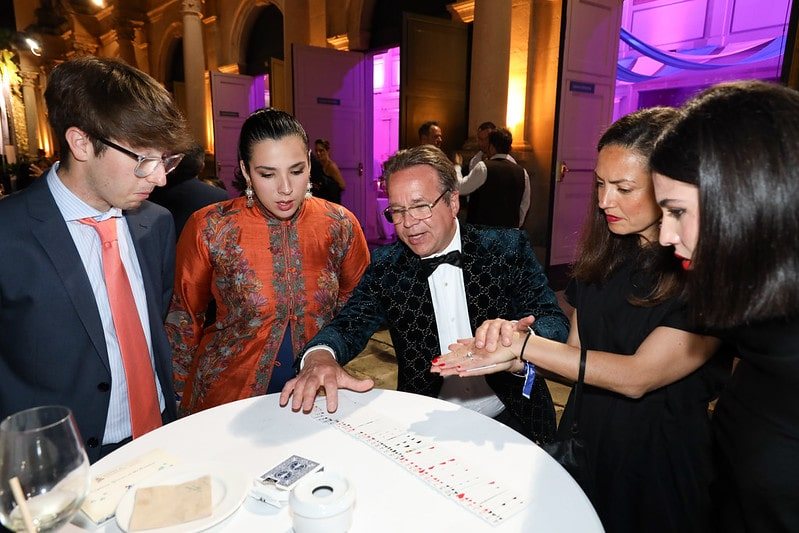
At the table, leaning in -
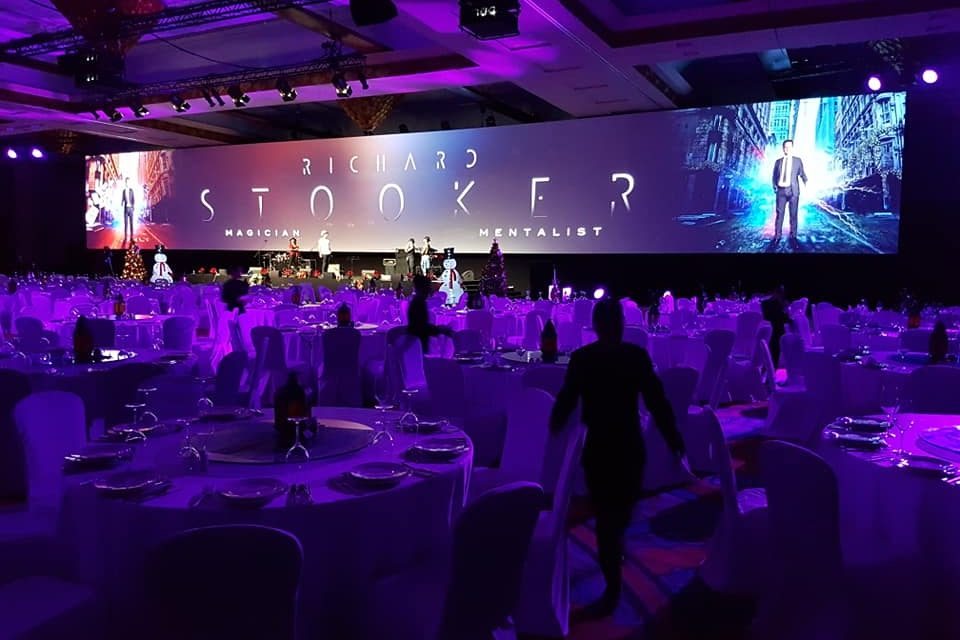
Set for dinner, nobody in yet
Which fair, which days
Send the fair, the hall, the days you need covered and your stand number. Multi-day bookings are quoted per day and the rate drops after the first.
Most enquiries are answered the same day.