
Questions
The things people ask before they book
Written for the person comparing three or four magicians with a budget to defend. If your question is not here, ask it directly and the answer will be added.
Booking and dates
How far in advance should we book?
Three to six months for a date between September and December: those weeks fill first, and a Friday in December is the most contested date of the year. A month is usually enough for the rest of the year. If your event is next week, ask anyway.
Can you hold a date while we decide?
Yes, and it costs nothing. A date is held first-come: if somebody else asks for it while you are deciding, you get a message and the chance to confirm before it goes.
What do you need from us to confirm?
A written confirmation by email or a signed quote. After that you get a call in the week before to walk through the running order, the venue and who else is on the programme.
Do you work through agencies and production companies?
Regularly. As the production company you get the same direct line to the performer a client would, which makes the day itself easier for everyone.
The performance itself
How long does he perform?
Close-up is booked in performing hours, most often two or three across a reception and a dinner. A stage set runs twenty to forty minutes. Both split into shorter blocks if your running order needs it, which usually works better than one long stretch.
How many guests can close-up magic cover?
A performing hour covers roughly eighty to a hundred people properly. Above that you add hours or accept that not everyone gets a turn, and it is better to decide that in advance than at nine o'clock.
Will guests be embarrassed or put on the spot?
No, and that is a rule rather than a preference. People take part because they want to, and they end up looking good in front of colleagues or clients. A guest who feels made fun of is a business problem, not an entertainment one.
Does it work for an international audience?
Most of the material is visual, which is why it holds a room with several first languages in it. He performs in English and Dutch and switches between tables without ceremony.
What if the room is loud, or seated, or spread over three floors?
All three are normal. Close-up is designed for a room that is doing something else. A venue on several floors is the interesting case, because then the question is how much of the evening he spends walking. Say so when you enquire and it goes into the plan.
Can he host or present as well?
He is booked as a magician, not as a host. If the evening needs a presenter, hire one, and let the magic do what only it does.
Practical and technical
What does he need from the venue?
For close-up, nothing: no stage, no sound, no lighting change, no space held back. For a stage set, a microphone he can move with, a light and a surface to work on. A changing room is appreciated and rarely essential.
How long does the setup take?
Close-up needs no setup. A stage set needs about thirty minutes on site, mostly to check sound and sightlines with whoever runs the room.
What does he wear?
Black tie by default, or whatever your dress code is. If your event has a theme or a uniform requirement, say so and it gets matched.
Is he insured?
Yes, and liability cover sits inside the fee. Venues that ask for a certificate get one before the date without a fuss.
What happens if he falls ill?
You get told immediately, not on the day. He performs alone and sends no substitute, so instead you get help finding a replacement through his own network and the booking cancelled at no cost.
What it looks like
The same answers, in a room
-

Close-up needs no stage, no sound and no slot in the running order. -
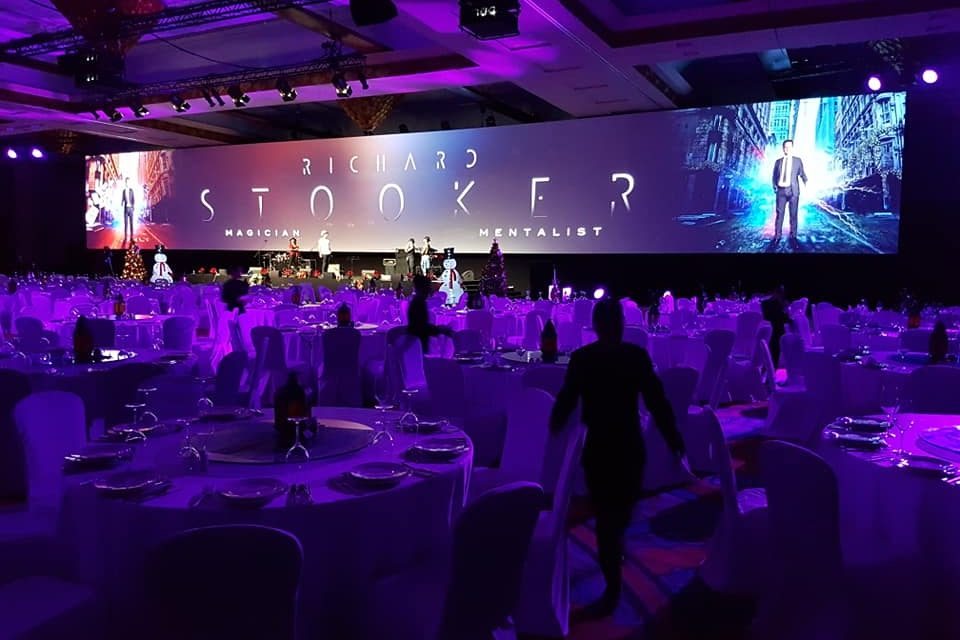
A stage set needs a microphone and a light. Twenty to forty minutes. -
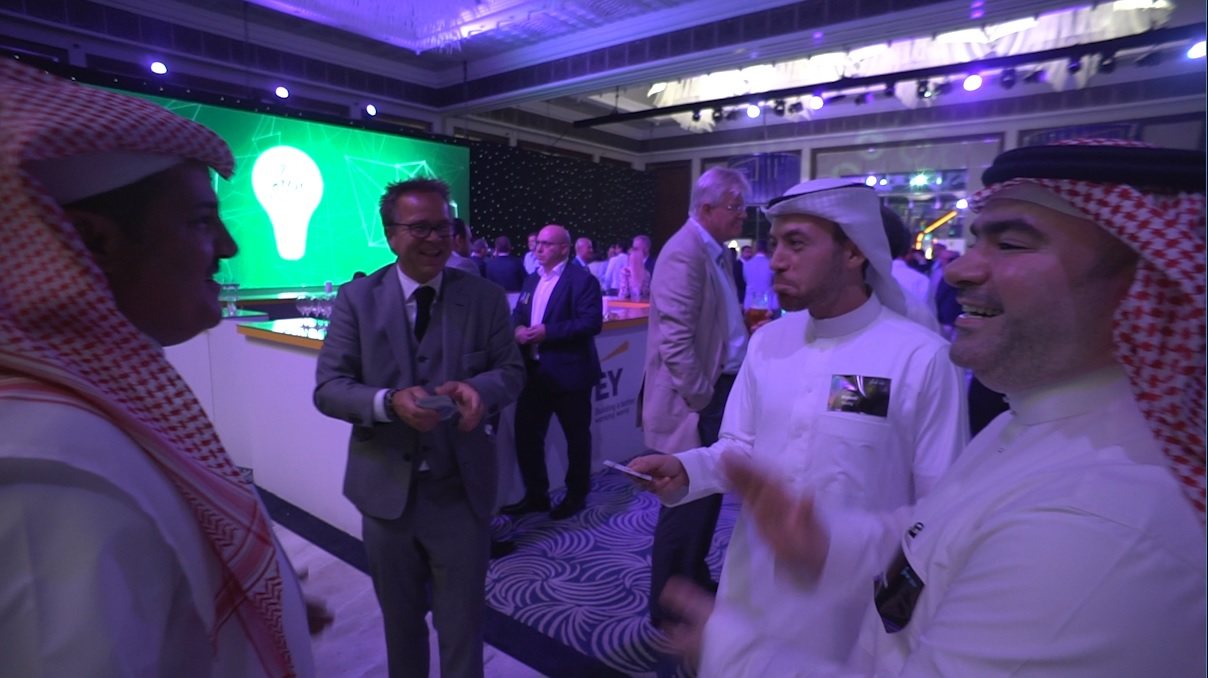
Receptions are where close-up does most of its work.
Discretion and photographs
Will our event end up on social media?
Not without your written consent. No photographs, no video, no name-dropping of your company or your guests. Much of this work happens in rooms where that guarantee matters more than the magic.
Can we use photographs and video of the performance ourselves?
Yes, freely, at your own event and for your own communications. The restriction runs one way only.
Can you name clients you have worked for?
Only the ones who have given permission, and that list is deliberately short. Want references from a comparable company before booking? Ask on the call and you get real ones rather than logos.
Money and terms
What does it cost?
A performance fee for the format and length you book, with travel and accommodation quoted separately at cost. The pricing page explains what sits inside the fee and what moves the number.
Do you charge extra for a second location on the same day?
Only for the travel between them. The fee is set by the total performing time, not by the number of rooms it happens in.
Where can we read the terms and conditions?
They are published on this site and linked from every quote, in Dutch, as issued by Richard Stooker Productions.
Still deciding?
Send the date and the city and you will get availability, a straight answer to whatever is still open, and a written quote if you want one.
Most enquiries are answered the same day.