
Occasion
Conferences
The content is not your problem. Your speakers are booked and your agenda is full. What is unsolved is the ninety minutes of break time, when four hundred delegates stand in a foyer looking at their phones because they know nobody.
The break problem
Networking does not happen because you scheduled it
Every agenda has a block called networking, and every organiser knows what it looks like: a foyer, a coffee urn, and clusters of people who already knew each other. Delegates rate a day on the conversations they had, and those rarely start on their own.
Close-up magic in the break is a mechanism, not a decoration. It gives a stranger a reason to stand next to another stranger, and something to say ninety seconds later. That is the whole intervention.
Where it goes
Three slots that work on a conference day
Registration
The first thirty minutes, while badges are being collected and the room is at its coldest. Early arrivals stop feeling early.
The coffee breaks
The standard use. Two or three breaks across the day, working the foyer, coming out on time so nobody is late back into the hall.
The opening set
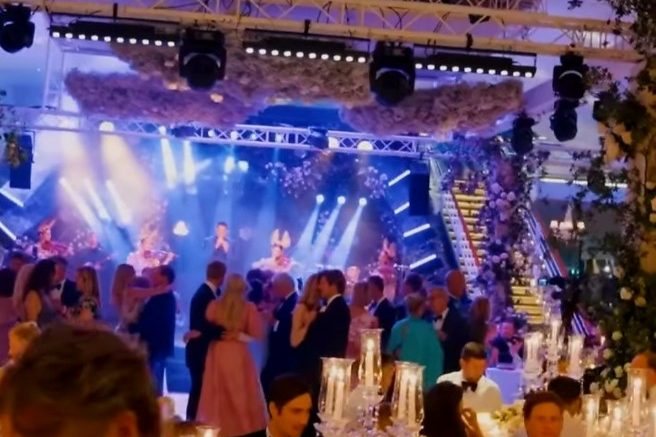
Twenty minutes on stage before the first keynote, to make one audience out of four hundred people who walked in separately. Your opening speaker inherits a warm room.
Between sessions
What the breaks look like
Delegates come out of a session, take a coffee, and stand in groups that already know each other. The break is where a conference either connects people or does not.
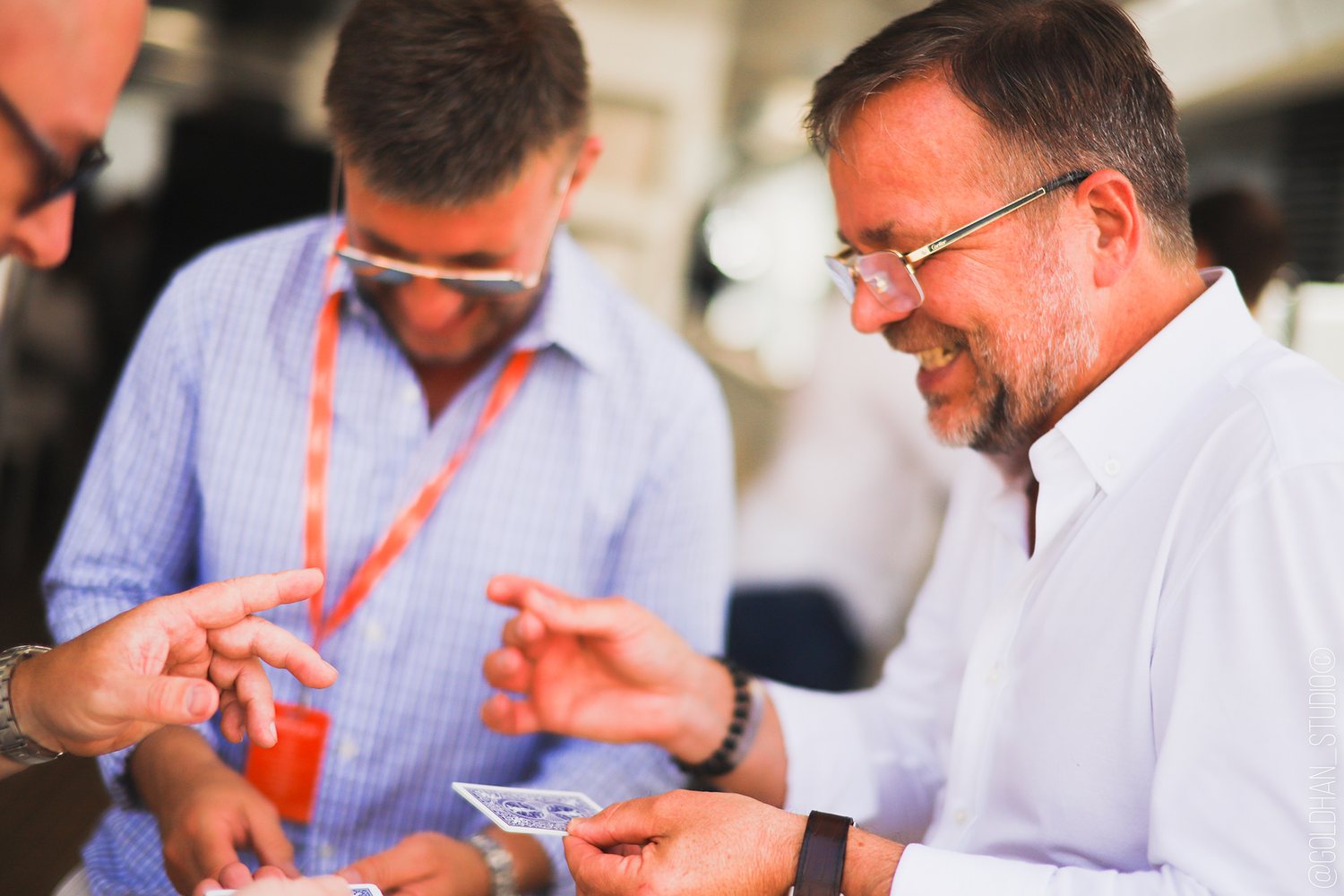
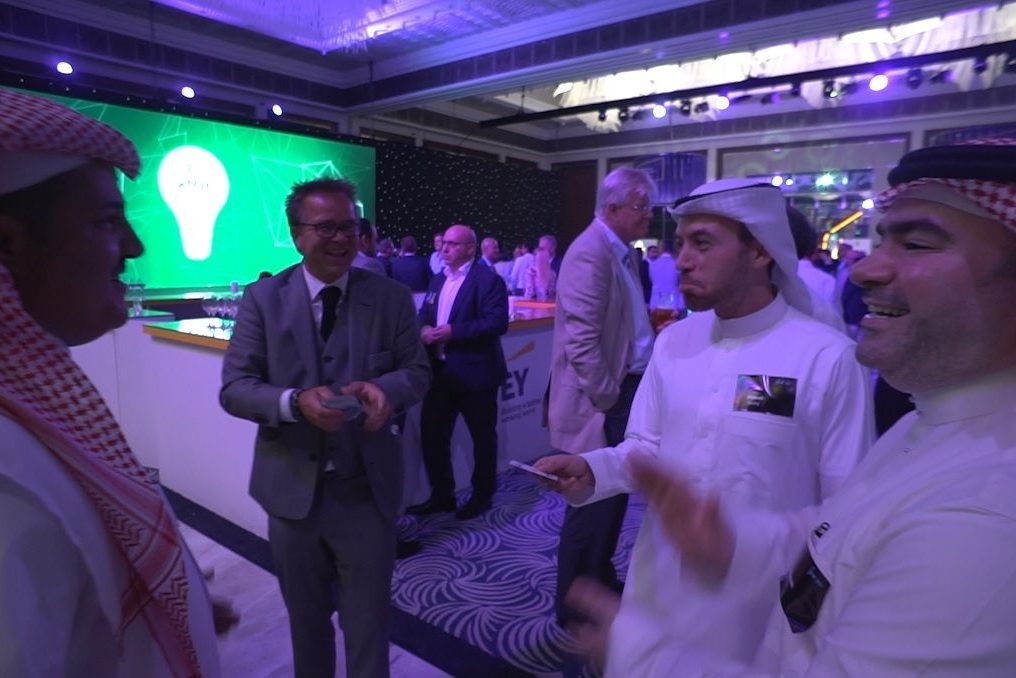
Ten minutes at a time, group by group, and back in the room before the next session starts.
He comes out of the foyer before your programme does
The fastest way to make an organiser regret booking entertainment is to have delegates still watching it when the next session starts. Break sets end three minutes before the room is called, and he moves people towards the doors.
If your day runs to a strict published agenda, say so on the first call. It changes how the sets are cut, not whether they happen.
What you are booking
- Typical shape
- Registration plus two or three breaks, or an opening stage set, or both
- Duration on site
- Half day or full day
- Delegates
- From eighty to well over a thousand
- Space required
- None for foyer work. Stage sets follow the stage-show specification
- Timing
- Sets end before your programme resumes, always
- Travel
- Worldwide. Travel and accommodation are quoted separately from the fee
Questions worth asking before you book
Will delegates be late back into the hall?
That is the organiser's real question, and the answer is no: the sets are built to end early rather than on time. He stops before the call and moves with the crowd towards the doors.
Can he work an international delegate mix?
Yes. He performs in English or Dutch, and almost none of the material depends on wordplay, so it carries across nationalities. For a heavily mixed room, mentalism travels even better.
Is this suitable for a serious industry conference?
It depends on the register, which is why the brief matters. No comedy set, no participation from the stage, nothing that reads as a party act. For a medical, legal or financial audience, mentalism is usually the right call.
From the floor
Evenings that ran like this one
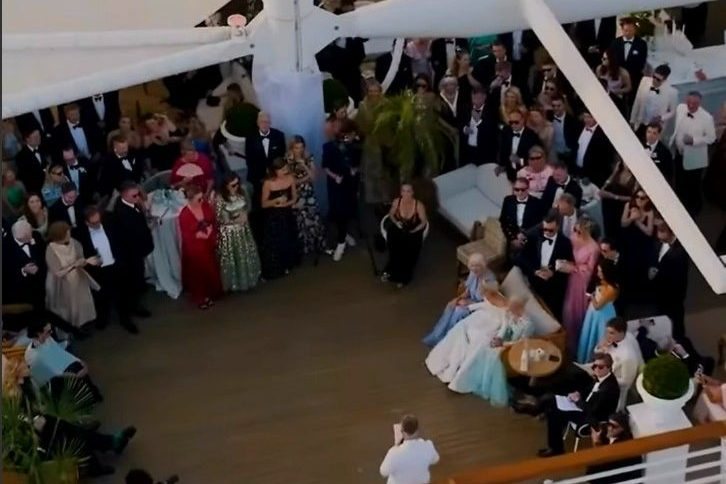
Receptions, dinners and programmes where the act had to fit around a running order somebody else wrote.
-
Black tie, and the middle left open -
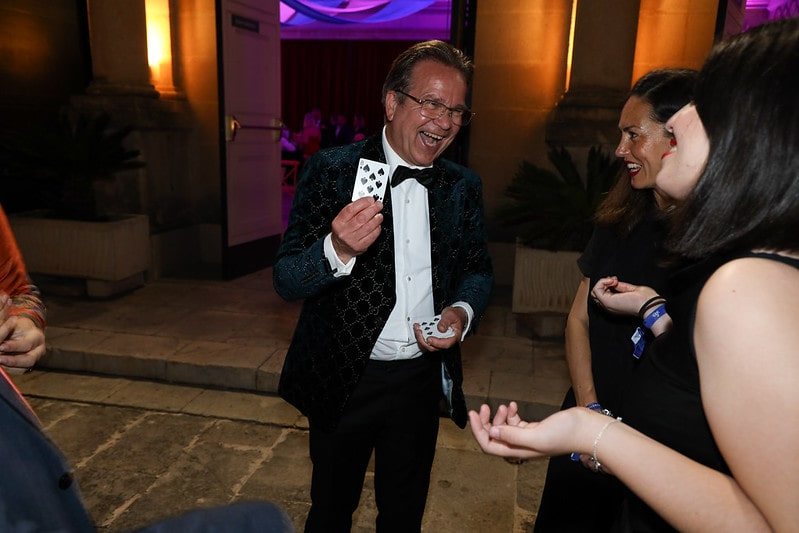
Arm's length, no table -
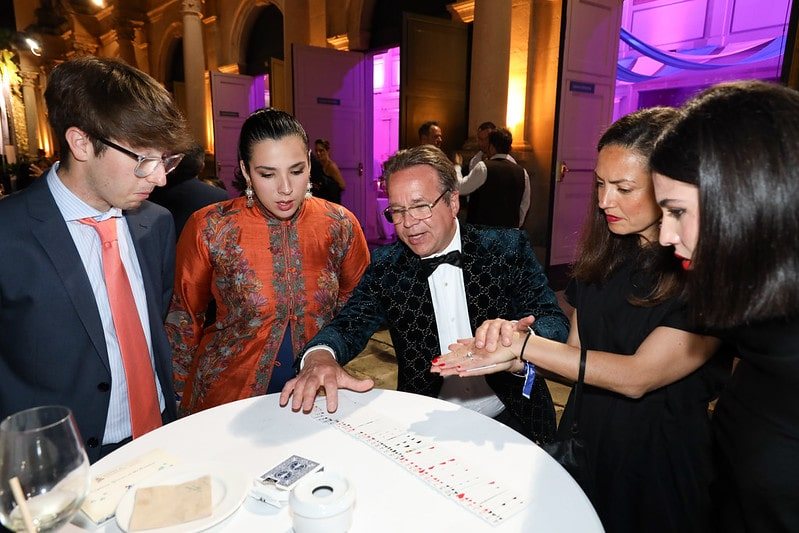
At the table, leaning in -
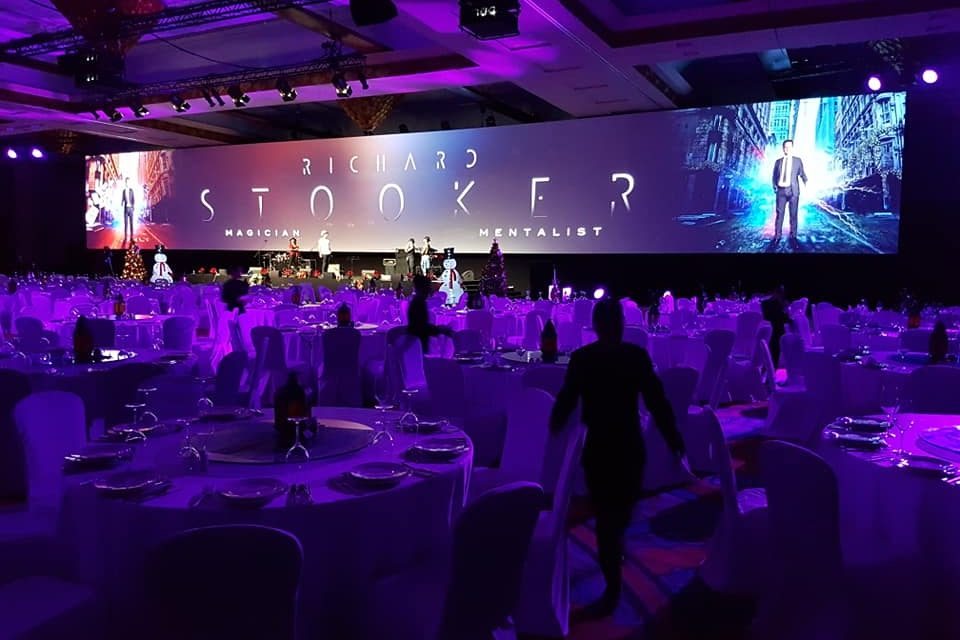
Set for dinner, nobody in yet
Send the agenda
Date, venue, delegate count and the break times. You will get a proposal that names which slots are worth covering and which are not.
Most enquiries are answered the same day.