
Occasion
Product launches
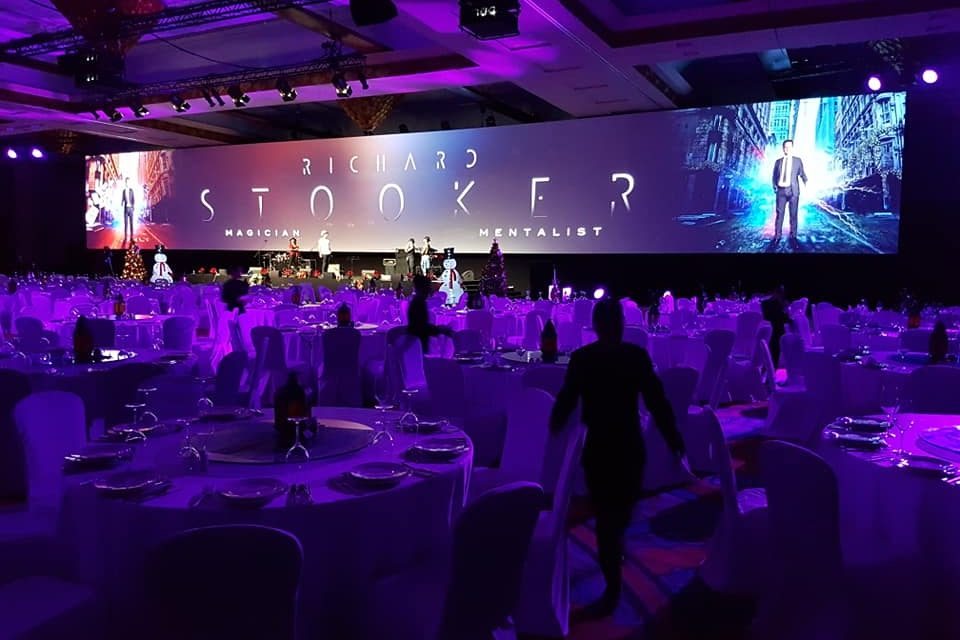
A launch is a reveal. So is every effect he performs. Build them as one thing and your product arrives the way a magician's final card does, and the photograph everyone takes is of your product.
The problem with launches
Everyone already knows what is under the cloth
By the time your guests are in the room they have read the teaser, seen the invitation, and guessed the rest. The reveal is not news. What is still yours to decide is how the moment feels, and that is staging, not marketing.
A magician is useful here for one narrow reason: revealing something at the exact second an audience stops expecting it is the entire craft. Handing that job to a professional is more sensible than it sounds.
How it gets built
Four weeks out, not four days
The brief
What the product is, what the one sentence is, who is in the room, and what your agency has already committed to. He works inside your creative, not next to it.
The build
The effect is designed around the object. A watch, a bottle, a key, a phone. Physical products work best; software needs a physical token to stand in, and choosing it well is half the work.
The rehearsal
On site, on the real stage, with the real object, before doors. Launch reveals fail on the mechanics far more often than on the idea.
The room after
Close-up magic through the reception that follows, using the product where it makes sense, so guests handle the thing rather than photograph it from six metres.
In the room
What a launch night looks like
The two halves of a launch: the room before the reveal, and the hour after it, when people are still holding a glass and looking for something to talk about.
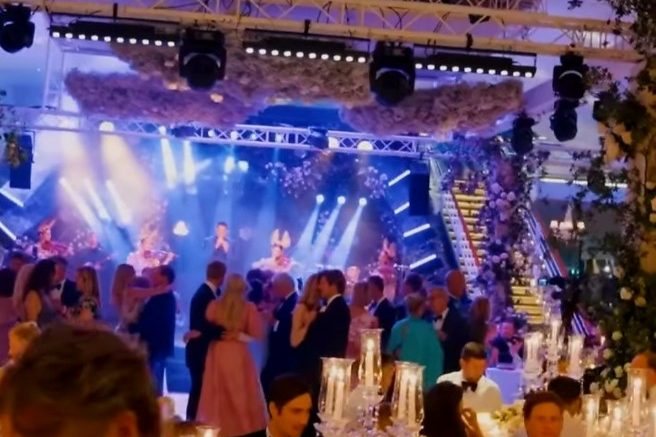
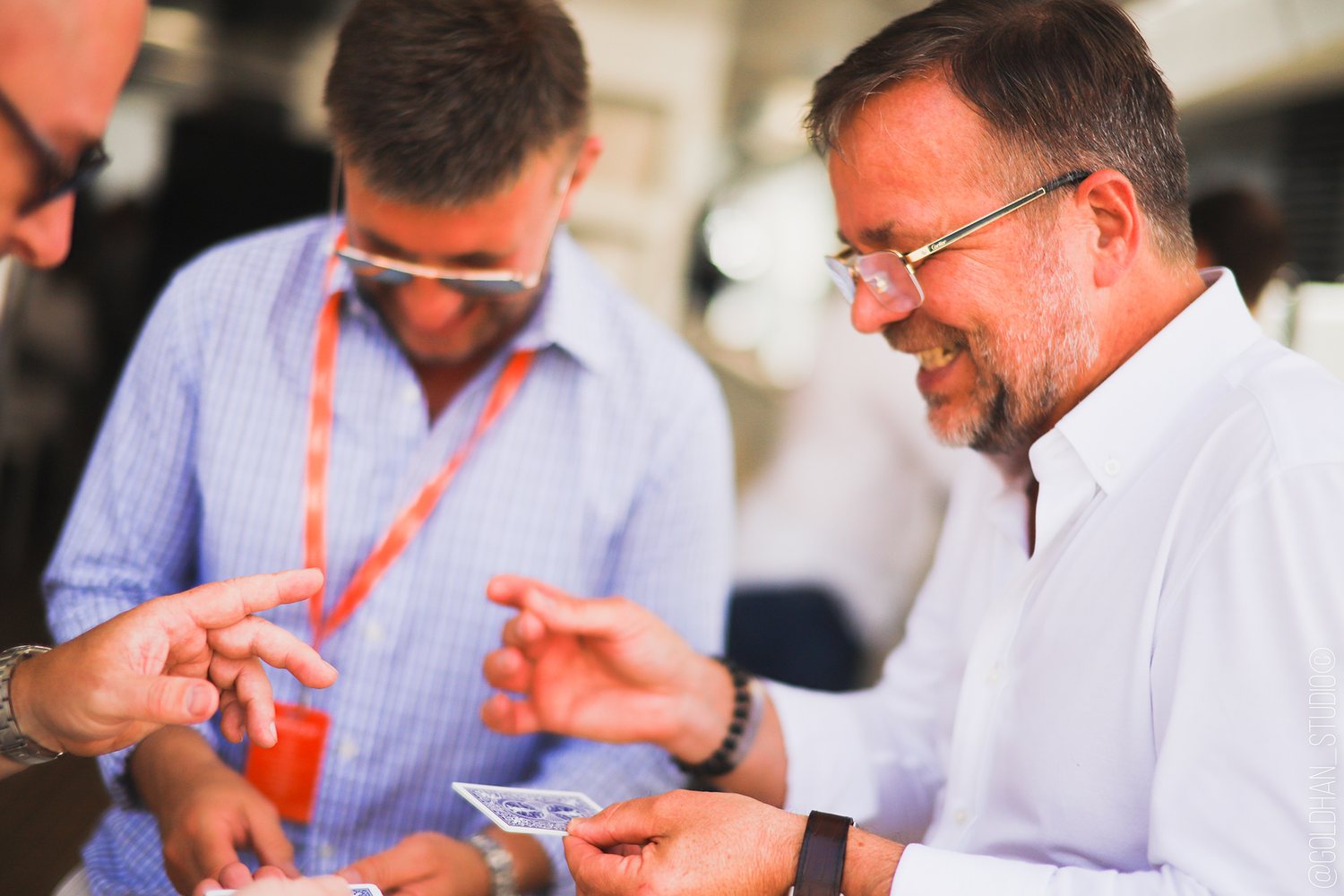
Both are the same booking. The stage moment is scheduled; the walk around fills the part of the evening a running order cannot.
When this is the wrong idea
If the launch is a serious announcement, a merger, a restructure, a financial result, keep a magician away from it. The register is wrong and the room will feel it.
It also does not rescue a weak product. It makes a good product arrive properly. Say which of the two you have and the conversation will be short and useful.
What a launch booking usually includes
- The reveal
- One custom effect built around your product, three to eight minutes
- The reception
- Ninety minutes to three hours of close-up before or after
- Development
- Briefing call, concept, and one on-site rehearsal
- Lead time
- Four weeks minimum for a custom reveal. Less than that and it becomes a standard set
- Confidentiality
- An NDA before the briefing is normal and expected
- Travel
- Worldwide. Travel and accommodation are quoted separately from the fee
Questions worth asking before you book
Can he sign an NDA before we brief him?
Yes, and he would rather you asked than not. Unannounced products are routine in this work.
Will our agency and his idea collide?
Not if he is in the room early. The failure mode is a magician booked three days out who discovers the creative platform is locked. Bring him in with the agency and the effect gets built inside the idea you already bought.
What if the product is not physical?
Then the effect is built around whatever object represents it: a key card, a device, a printed licence, a first-edition serial number. That choice is a creative decision, and it is the first thing he will want to talk about.
From the floor
Evenings that ran like this one
Receptions, dinners and programmes where the act had to fit around a running order somebody else wrote.
-
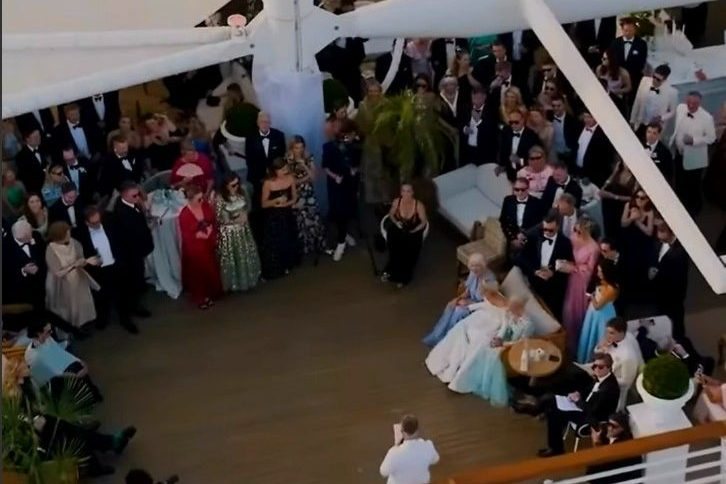
Black tie, and the middle left open -
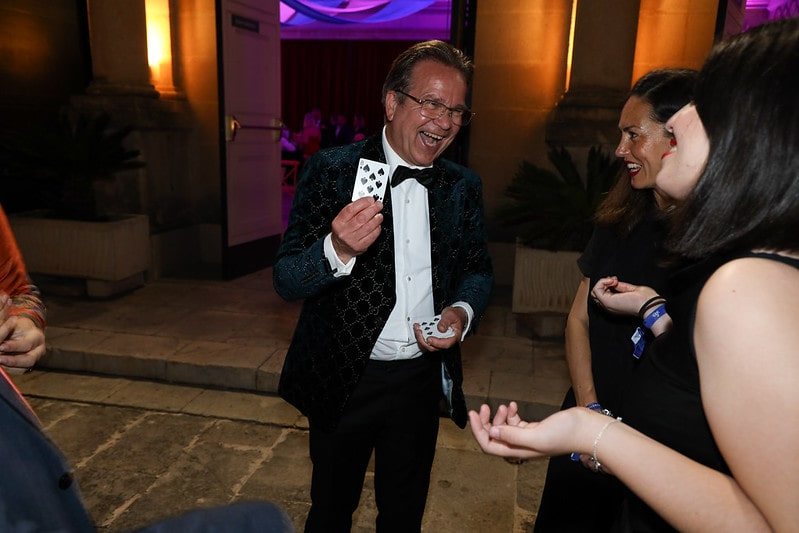
Arm's length, no table -
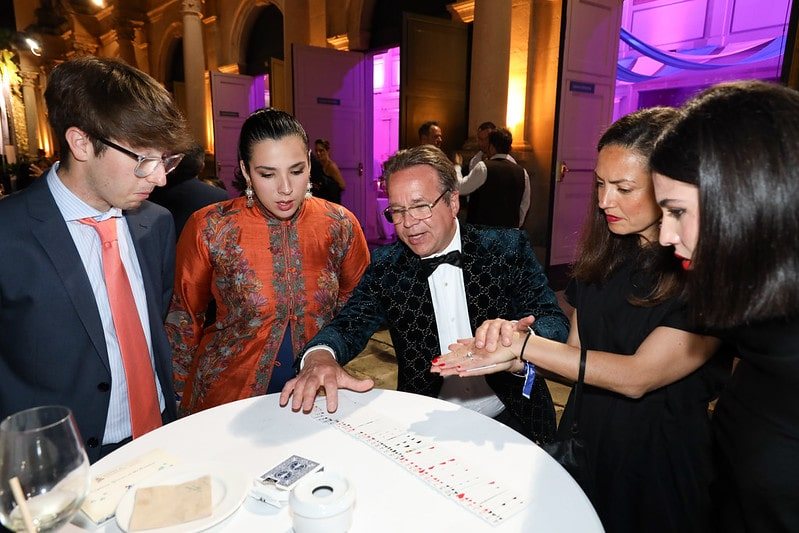
At the table, leaning in -
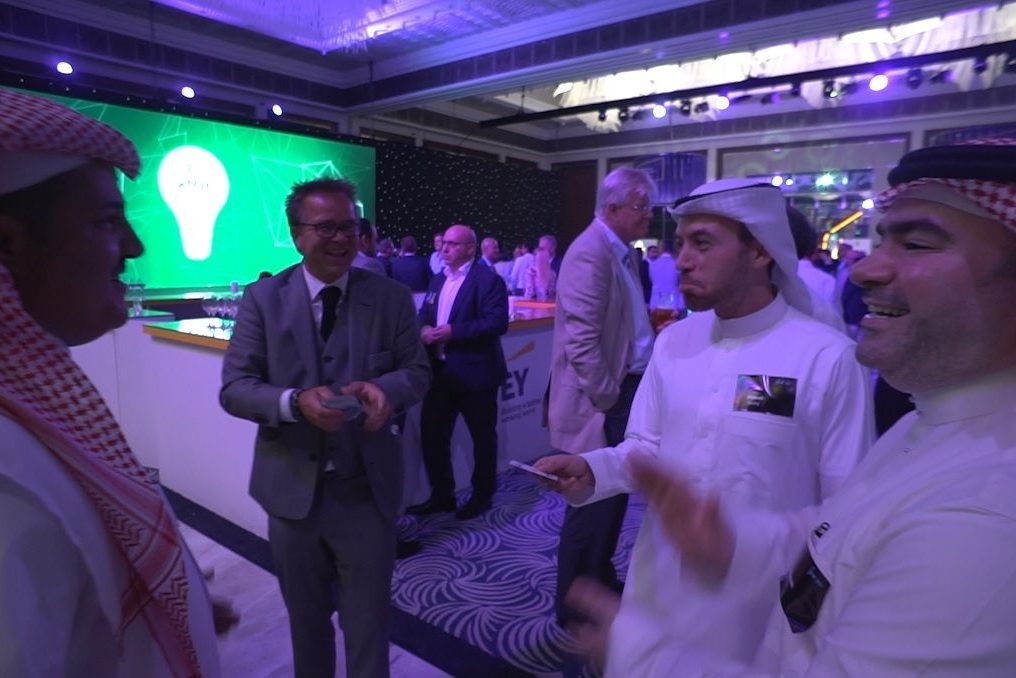
Dubai, during the reception
Bring him in early
Send the date, the product category, and where the launch sits in your calendar. Under four weeks, you hear what is still possible rather than a promise that is not.
Most enquiries are answered the same day.